Moissanite used to be the alternative stone; now it is the informed choice. It sparkles more than diamond, costs a tenth as much, and survives a lifetime of daily wear — which raises the fair question: what exactly are you paying for when you pay for diamond? This guide compares the two stones on the five factors that matter for a ring you will wear every day for the rest of your life.
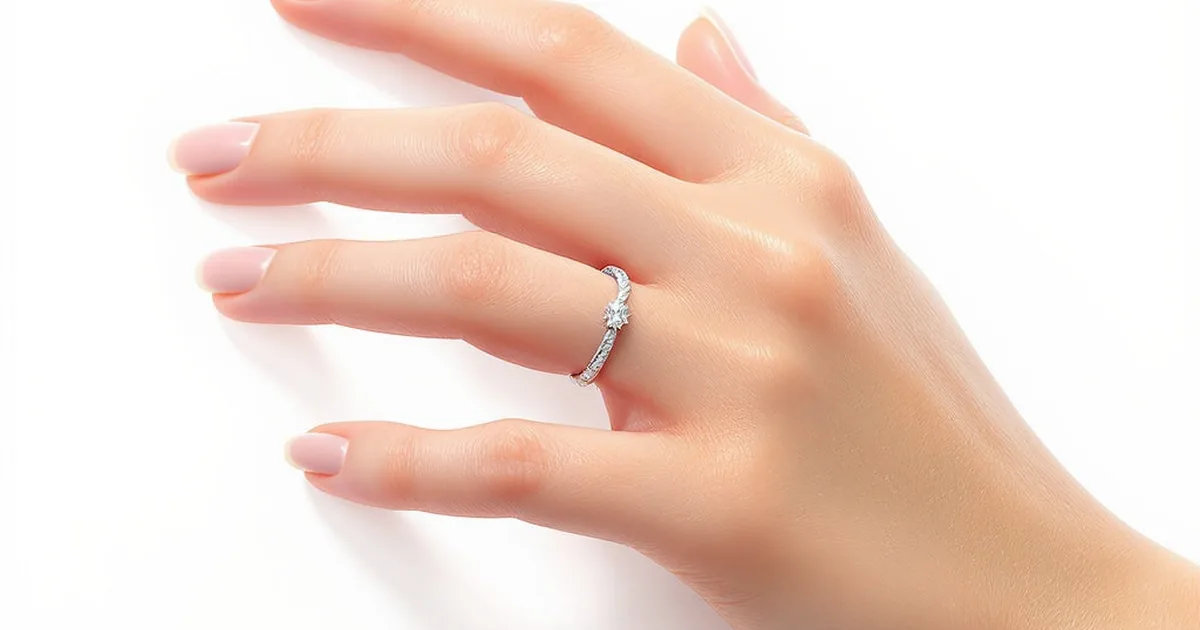
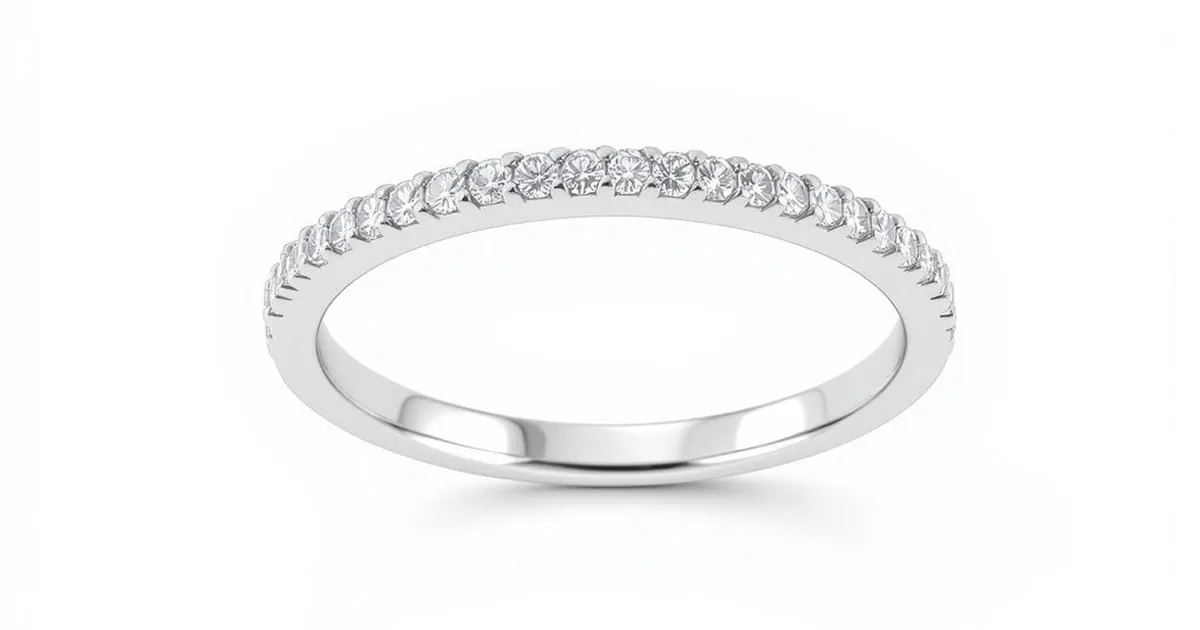
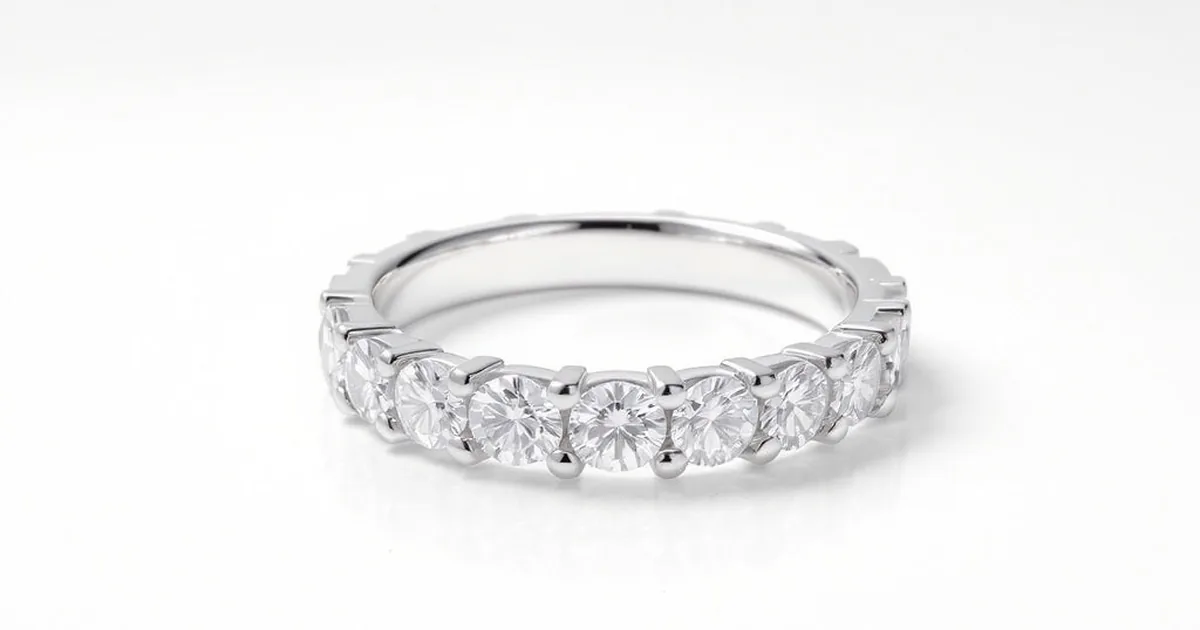
Moissanite's refractive index (2.65) beats diamond's (2.42), and its fire — the rainbow flash as light splits inside the stone — is roughly double. On the hand, a full eternity moissanite band reads as a continuous line of light; diamonds read whiter and calmer. Which is "better" is taste: if you want maximum sparkle, moissanite wins; if you want understated white light, diamond's restraint is the point. Nobody looking at either stone from across a table can tell them apart.
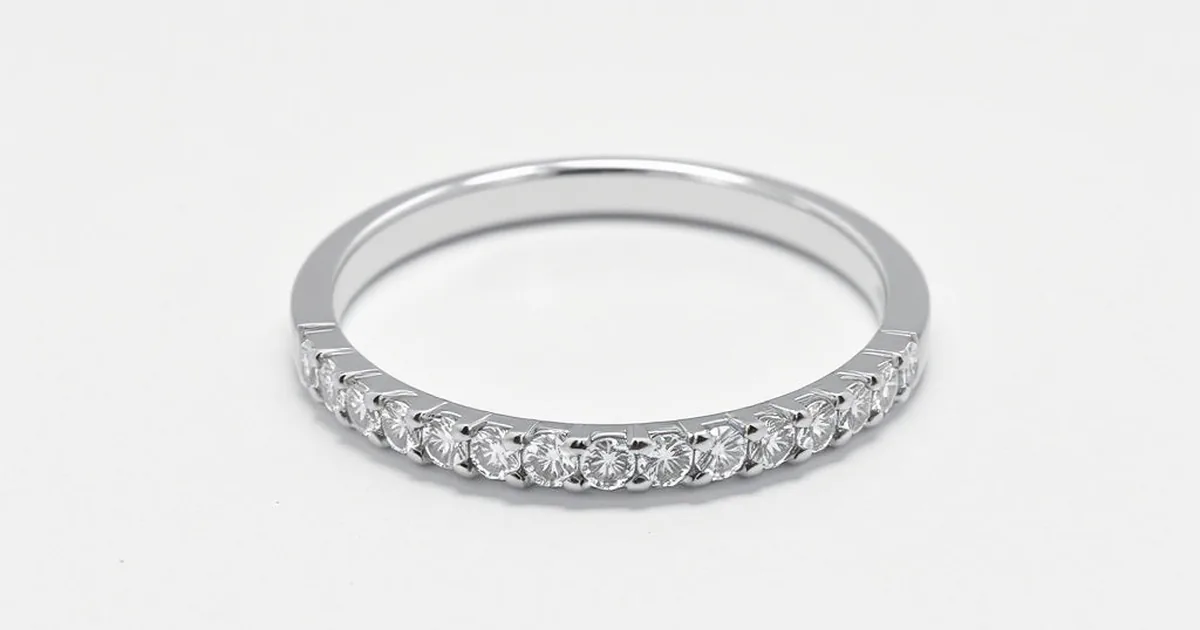
Diamond scores 10 on the Mohs scale — the hardest natural material. Moissanite scores 9.25, harder than every gemstone except diamond itself. In practice: both stones survive decades of daily wear without scratching in normal life. The difference shows only in extreme abrasion over decades — a moissanite worn 24/7 for forty years may show micro-scratches a diamond would not. For a wedding band, both are genuinely forever materials; our full eternity bands are built on this premise.
A 1-carat diamond of good quality costs $4,000–$8,000. A 1-carat moissanite of excellent quality costs $300–$600. That is not a sale — it is the structural price difference between a stone that is mined, with all the supply chains that implies, and one that is grown in a lab. Practically: for the price of a plain 0.5-carat diamond solitaire, you can buy a 14K gold full eternity moissanite band with a dozen stones and money left for the honeymoon.
Every moissanite is lab-grown — there is no mining, no conflict trade, no environmental crater behind it. Its carbon footprint is a fraction of mined stone's. Diamond has made real progress on certification (the Kimberley Process), but the supply chain remains harder to verify for a buyer in a jewelry store. If origin matters to you — and for many couples it decides — moissanite's provenance is simply easier to know.
Three things to know before choosing. First: moissanite's rainbow fire is more visible — some people love it, a few find it showy next to diamond's white sparkle. Second: moissanite's lower price means lower resale value — a diamond holds some value; a moissanite behaves like a car, not an investment. Third: the social story — some couples want the tradition of diamond, and that is a real value too. None of these are arguments against moissanite; they are the full picture the sales floor skips.
Choose moissanite if you want maximum sparkle per dollar, verified ethical origin, and a stone you can wear hard without insurance anxiety — our under-$250 collection is the entry point. Choose diamond if resale value matters, if tradition is part of the meaning, or if you have budget for the real thing. Both are beautiful; only one leaves budget for the wedding.
Diamond grading's four Cs translate only partly. Cut matters most for both stones — a well-cut moissanite returns light like a mirror; a poor cut kills either stone. Color: moissanite runs near-colorless (G–H equivalent) in standard grades, with colorless premium grades available; older moissanite had a greenish tint that modern stones eliminated. Clarity: lab-grown moissanite is essentially eye-clean across the board — the inclusion lottery of mined diamonds does not exist. Carat: moissanite is sold by diameter (a 6.5mm round moissanite ≈ a 1-carat diamond in face-up size) but weighs about 10% less — another reason eternity bands with many small stones are moissanite's natural format. Our baguette styles show the cut quality modern moissanite achieves.
The stone you choose will be on your hand through everything — dishes, work, decades. Choose the one whose sparkle you love at the price that lets you sleep, and let nobody's margin decide for you. Browse the eternity bands and sculptural styles to see what moissanite does in gold.