Ring stacks went from trend to permanent language — and like any language, they have grammar. A great stack is not many rings; it is a few rings in conversation: widths that relate, metals that agree or argue on purpose, stones placed where the eye expects a rhythm. This guide covers the formulas that work, the mistakes that crowd, and how an eternity band anchors almost any stack.
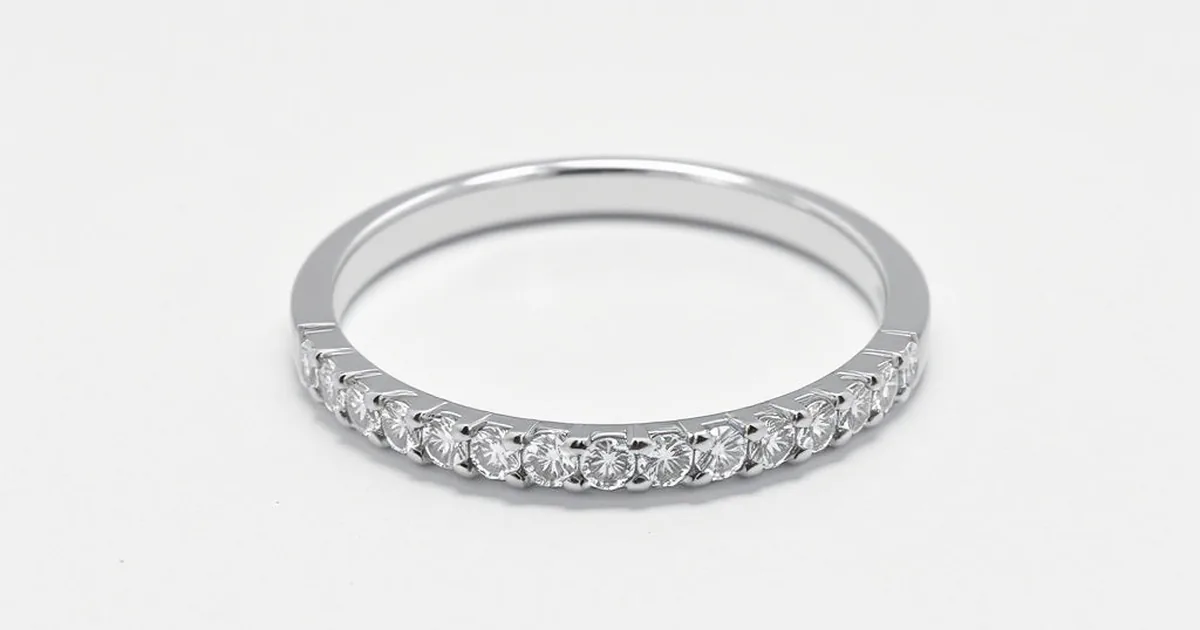
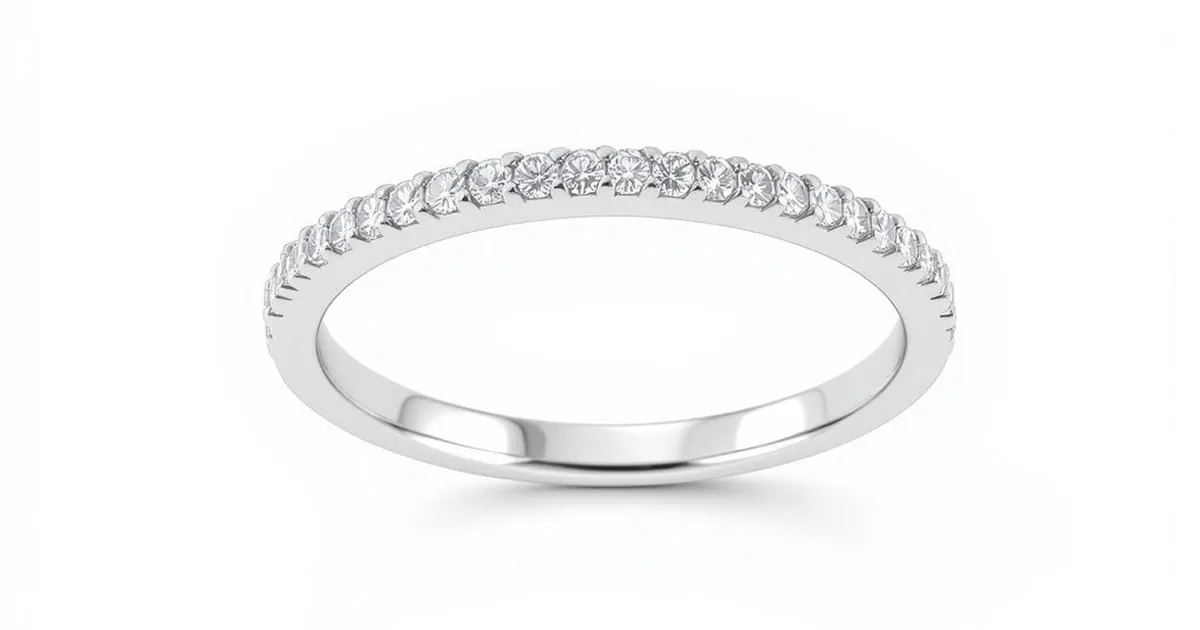
Every good stack has one piece the eye lands on first — the anchor. The eternity band is the market's best anchor: an unbroken line of light that reads as intentional from any angle. Build around it: the anchor at the base of the stack (closest to the hand), supporting pieces layered toward the knuckle. A full eternity band plus one thin plain band above it is the two-piece stack that started the entire trend — still the cleanest version of it.
Stacks fail by width monotony — five identical 2mm bands read as one wide cuff, not a stack. The rhythm rule: vary the widths as you go up. A 2mm eternity, a 1mm plain band, a 1.5mm twisted piece — the eye reads the variation as melody. Three to four rings is the stack's sweet spot; past five, the fingers disappear and the hand stops functioning for anything delicate.
The old rule — never mix — retired with the landline. The modern grammar: metals mix when they share a finish or a temperature. White gold and silver (cool metals) stack naturally; yellow and rose gold (warm metals) stack naturally; the deliberate clash of cool and warm works when one piece bridges them — a two-tone band, or a rose gold piece with white stones that echo the white metals. Our twisted and curved bands come in all three metals precisely because the stack decides, not the collection.
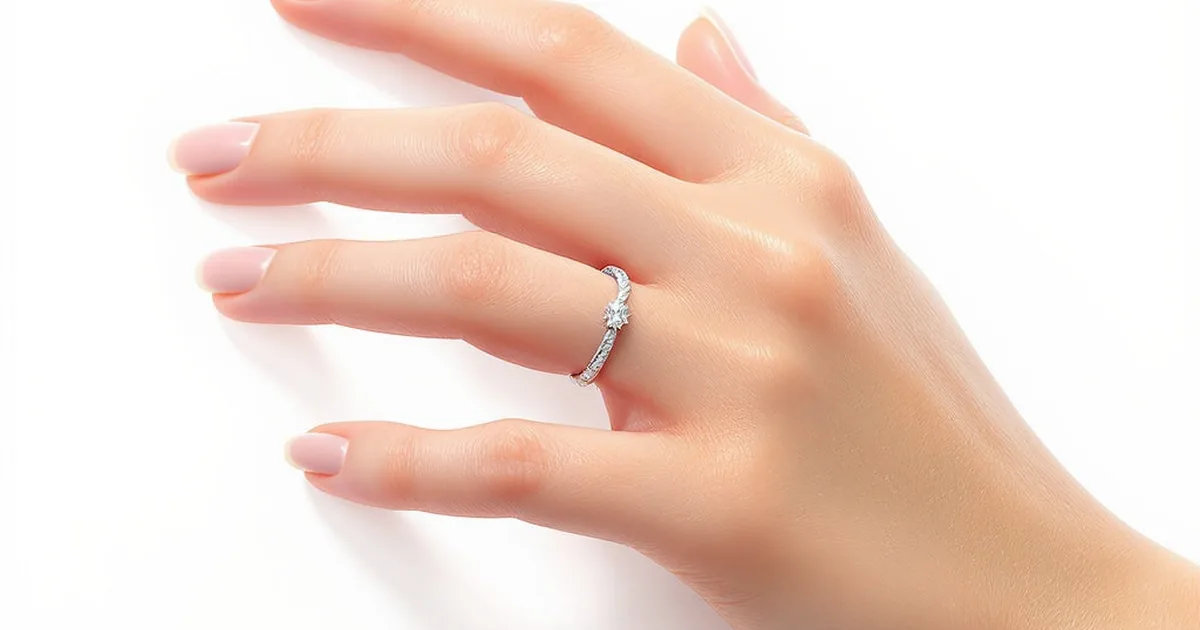
A stack that includes an engagement ring treats it as the anchor it already is: the eternity band below (wedding band position), a thin spacer above if the set wants height, and nothing that competes with the center stone. The curved bands exist for exactly this — they nest around a solitaire's profile so the pair reads as one designed object. When the engagement ring is already ornate, the stack ends there: one curved band, and the conversation is over.
The Classic: full eternity + 1mm plain band. The stack that suits every hand and every decade.
The Asymmetric: eternity band on one finger, single thin band on the adjacent finger. Movement without clutter.
The Heirloom Mix: a stone band, a plain band, a vintage piece — three registers, one metal family.
The Minimal: one 2mm eternity, alone. For hands that type, lift and build — the stack that survives real life.
Stacks live on hands that work, and three mechanics matter. First: total width — a stack wider than 8mm catches on everything and collects soap in the shower; keep the stack under that ceiling. Second: stone placement — palm-side stones (full eternity) in a stack feel the grip; put the smooth-sided pieces toward the palm. Third: metal softness — gold scratches gold, so the stack's pieces should be similar hardness (gold with gold, tungsten alone) or separated by the silicone band nobody admits to wearing at the gym.
The best stacks are biographies, not purchases — each ring marking something. The practical build: start with the anchor (an eternity band or the engagement ring), add the plain spacer within the first year, and let the third piece be earned — an anniversary band, a birthstone piece, a travel find. This pace does two things the one-day shopping spree cannot: it keeps every piece meaningful, and it lets the hand's real habits shape the stack — the piece that catches on everything leaves, the piece that disappears into daily wear stays. The under-$250 collection is built for this pace: each addition is a decision, not an investment.
Stacking is curation, not accumulation: an anchor, a rhythm of widths, metals that agree or argue on purpose. Start with one eternity band — the under-$250 edit has a dozen — and let the stack grow at the pace your hand earns it. The best stacks, like the best wardrobes, were assembled slowly and worn without thinking.