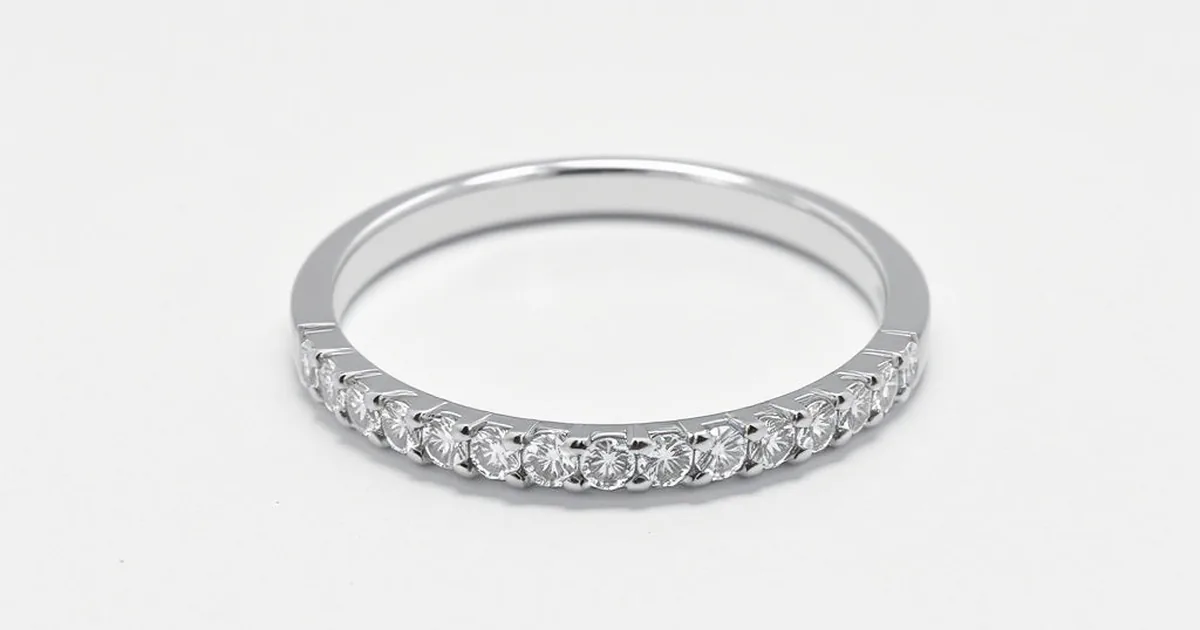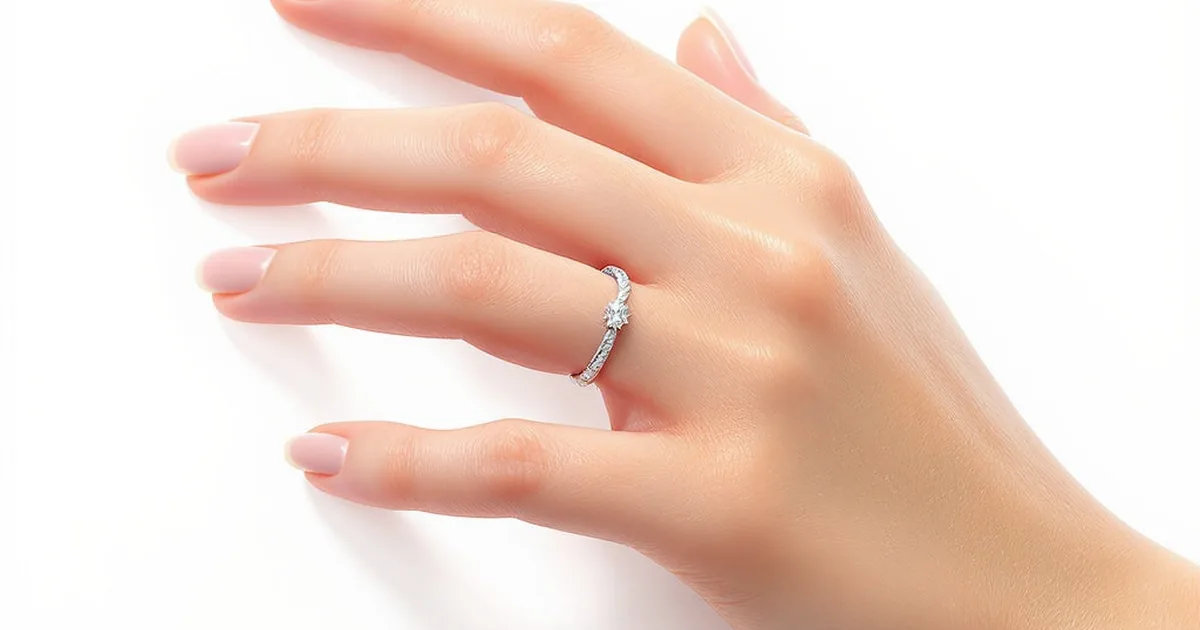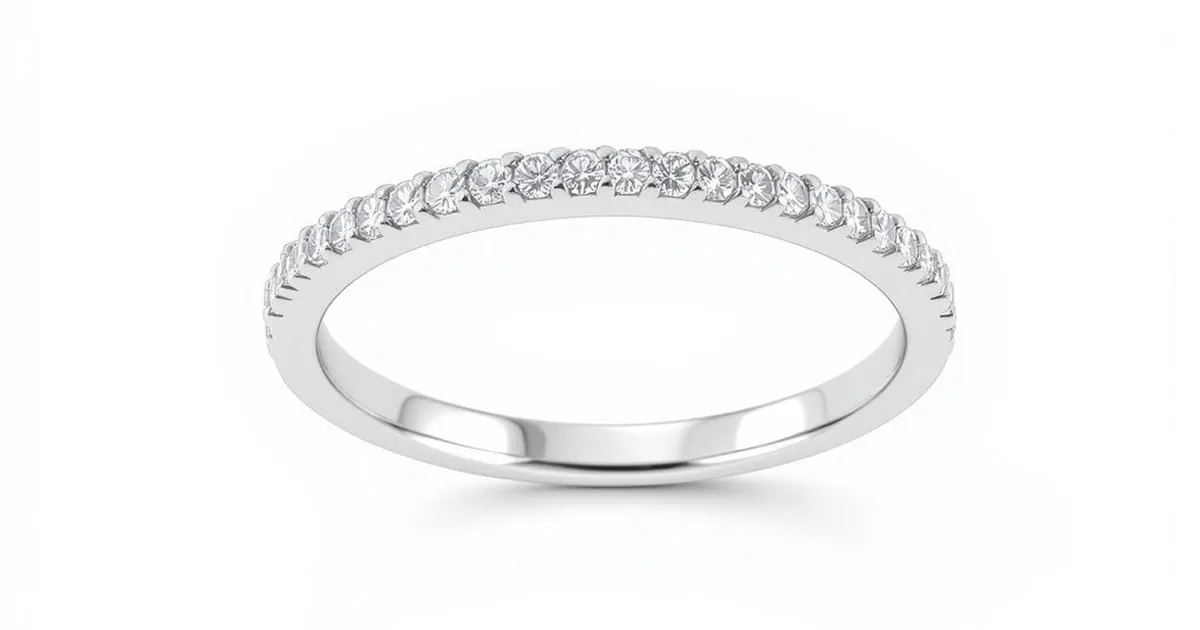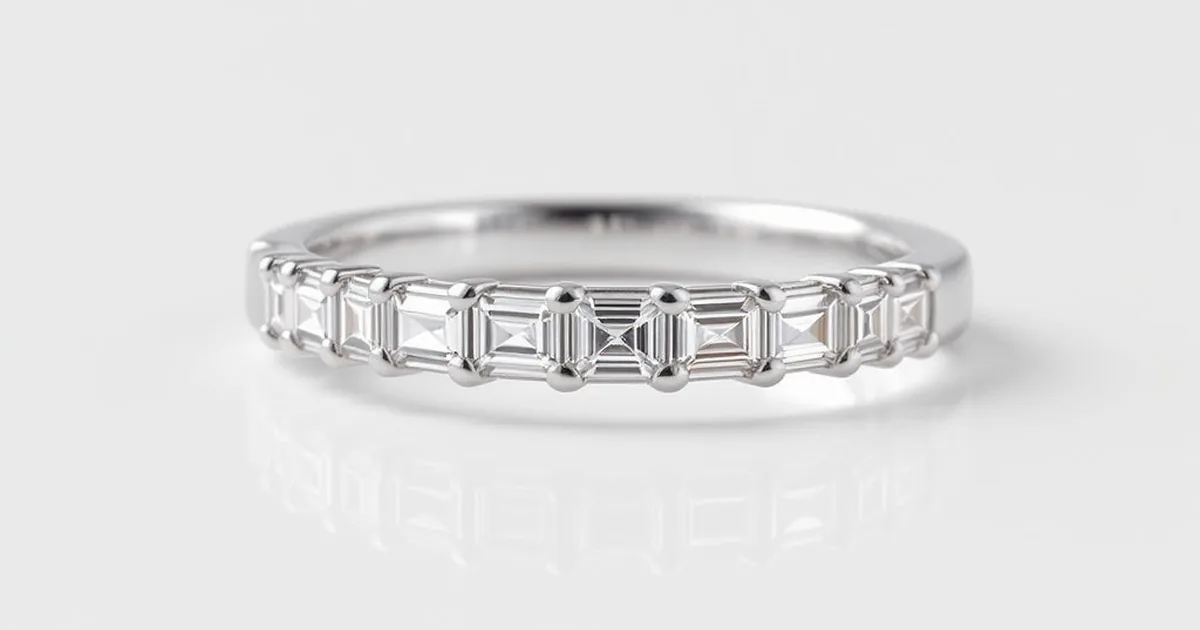
A wedding band is the one ring that cannot be wrong — it goes on at the altar and, for most wearers, stays on through decades of bodies that change. Getting the size right the first time matters more than any other jewelry purchase, and the process has more traps than people expect: morning measurements, cold fingers, ring sizers that lie. Here is the complete method.
A belt-style ring sizer (the plastic loop type) is more accurate than printable charts, which stretch with printing. Better still: visit any jewelry counter and ask to be sized — free, thirty seconds, professional tools. Measure several times across several days and trust the size that repeats. Our size charts list US sizes with exact inner diameters — the eternity bands run from size 5 through 12 depending on style.
The ring must pass the knuckle, and for many hands the knuckle is wider than the finger's base. If your knuckle fights the sizer, size to the knuckle and accept a slightly loose base — a ring that barely passes the knuckle will never pass it on a swollen morning, and a ring stuck between knuckle and base is a soap-and-ice emergency. The compromise size: the largest that slides over the knuckle with slight resistance and the smallest that does not spin freely at the base.
Wide bands fit tighter than narrow ones — a 6mm band needs a half size larger than a 2mm on the same finger, because more metal contacts more skin. If you sized with a thin sizer but are buying a 6mm tungsten band, size up a half. Buying the 1.5mm twisted band? Your sizer size is correct as-is.
Bodies change — weight shifts, pregnancies, age all move finger sizes. This is where metal choice meets sizing: gold and silver bands resize up or down at any jeweler; tungsten cannot resize at all. If your weight is in flux or you are young, either choose a resizable metal or size for today and plan a replacement at the decade mark — a $200 tungsten band replaced every ten years is still cheaper than gold resized three times. Full eternity bands with stones all around are the hardest to resize (often impossible) — size them with extra care, or choose the half eternity that leaves a sizing channel.
Three real-world factors move ring size temporarily, and a band lives through all of them. Heat and humidity swell fingers a quarter to half size — summer rings fit tighter than winter ones, which is why the evening-at-room-temperature rule exists. Altitude and flights do the same: rings sized at sea level loosen on a mountain honeymoon. Pregnancy and significant weight changes shift sizes permanently — another argument for resizable metals (gold, silver) over tungsten for wearers expecting life changes. The practical habit: if the ring spins loosely every winter, a jeweler can add sizing beads inside the band for $20 — a fix, not a replacement.
Couples often size each other's rings as a surprise — and surprises are where sizing errors live. Borrow a ring she already wears on the correct finger (trace it, or take it to be measured), or enlist a friend with a jewelry habit. When the surprise fails and the size is wrong, the fix is a resize for metal bands or a replacement for tungsten — which is why our 30-day return window exists: order the best-guess size, propose, and exchange quietly if the guess missed.
Size in the evening, at room temperature, with a proper sizer. Add a half size for wide bands, respect the knuckle, and choose a resizable metal if your body is still writing its story. Do that, and the band that goes on at the altar still fits at the fiftieth anniversary — the entire point of the purchase. Browse the collection with your size in hand, and let the 30-day window cover the surprise.